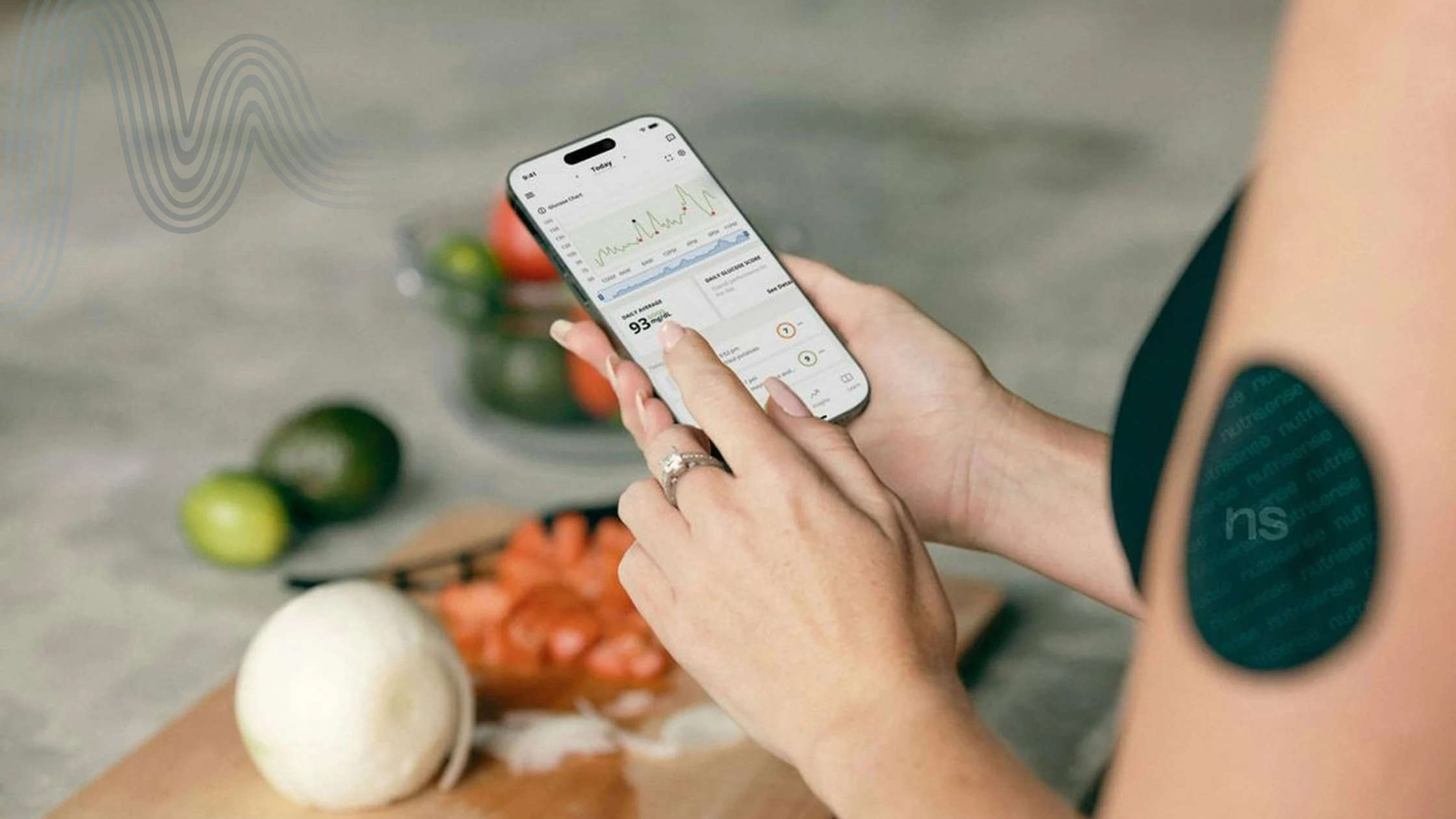
She arrives with six months of data. You have ten minutes.
Drawing on a conversation with Dr. Orlanda Allen, a medical doctor and healthcare leader.
A patient comes in having tracked everything.
Sleep stages, resting heart rate, cycle length, temperature, steps, mood. Six months of it, on her phone, exported into a PDF she printed last night.
She is not being difficult. She is doing what she has been told to do: take ownership of her health, come prepared, bring evidence. She has been more rigorous about it than most.
And now it is sitting on the desk, and there are ten minutes.
The integration problem nobody has solved
I spoke recently with Dr. Orlanda Allen, a UK doctor and senior healthcare leader whose career has been spent designing the services the rest of us try to navigate. Her background is anaesthesia, intensive care and emergency medicine, and she now leads a surgical service, having previously headed women's services across breast, gynaecology, obstetrics and fertility.
When we got to wearables, she was positive about what women are now able to see about their own bodies and then entirely clear-eyed about what happens next.
The apps do not integrate with clinical practice. There is no route from her device into your record. At best there is a download, and a download in a short appointment is not help. It is another thing to process.
So the data arrives in the least usable form possible, at the moment when there is least capacity to use it, carried by a patient who reasonably expects it to matter.
The bigger point underneath it
Dr. Allen said something else that has stayed with me. Asked where the system actually fails women, she did not say diagnosis. She said navigation.
You get five minutes with your GP, ten if you are lucky. You know something is wrong. You do not know what to ask for. And if you go looking privately, there is no clear way to tell whether the person you are booking is trained for what you are dealing with. She pointed out that most women do not know gynaecology has sub-specialties at all, let alone which one fits their problem.
The wearable data is a symptom of that. Women are collecting evidence because they expect to have to prove something.
What a clinic can do about it
Decide what you want, and ask for it. If a trend in sleep or cycle length is useful to you, say so before the appointment and name the format. A patient told exactly what to bring will bring exactly that. A patient told nothing brings everything.
Give the data somewhere to go. A short structured field in your intake — a few specific questions rather than "upload anything relevant" — converts raw tracking into something your clinician can read in thirty seconds.
Say what you are and are not. If you are a menopause specialist, say so in language a frightened forty-four-year-old can match to her own situation. Most clinic websites describe services. Few describe the woman who should be booking.
Acknowledge what she brought. Even when it changes nothing. A patient who tracked for six months and was not asked about it once learns something about how much her effort counts.
Why it matters commercially
The woman who arrives with six months of data is your most motivated patient. She is engaged, she is organised, and she has already decided to do something about this.
If the experience tells her that her effort was irrelevant, you have not lost a difficult patient. You have lost your best one.
The full conversation with Dr. Orlanda Allen is on the Wellness & Growth Journeys podcast: https://youtu.be/T4yHY0DqFCw


